Devi Stuti of Rajanak Mahesvar Rszdan
 |
|
BOOKS & PUBLICATIONS
|
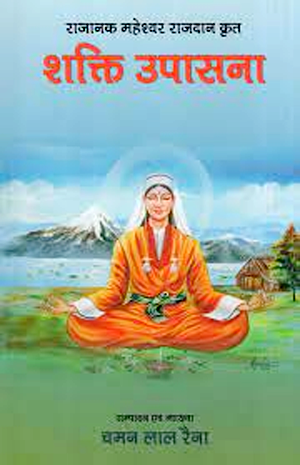
 Devī-Stuti of Rājānak Maheśvar Rāzdān Devī-Stuti of Rājānak Maheśvar Rāzdān Edited with Explanation by C.L. Raina
|
 |
|
|
| Devī-Stuti of Rājānak Maheśvar Rāzdān Edited with Explanation by C.L. Raina Cataloging in Publication Data — Courtesy: D.K. Agencies (P) Ltd. ISBN: 978-81-246-0000-0 (Pb) First published in India in 2023 © Chaman Lal Raina ,All rights reserved |
|
|
|
Foreword
|
|
|
|
Kashmir has been a spring of spiritual knowledge and the birth of monistic philosophy of Kashmir Śaivism, the Trika system, which brings us to the awareness in the context of the role of “Parama-Śiva” through Śakti. In fact, in the Śākta-Tāntricism, Śakti, as the Parā-Bhaṭṭārikā or Goddess is Herself the ultimate Reality. The approach to Parama-Śiva, as mentioned by some teachers of the tradition is through Śakti, manifested in various forms of Devī. It is verily, the śāktopāya.
One of the greatest scholar of Kashmir Śaivism has been Abhinavagupta, a ninth-century philosopher, logician, mystic, poet and above all the Āgamic seer of the Tantrāloka, who had received spiritual guidance from many teachers and had many distinguished disciples. All of them have enriched the Trika literature with their intuitive thoughts and experiences to put in various practices that one can follow to achieve the state of Śiva. However, for many centuries the teaching of various scriptures related to Kashmir Śaivism remained elusive. The interest was rekindled much later in nineteenth century with the birth of Swami Lakshman Joo, disciple of Swami Ram Ji and Swami Mehtab Kak Ji. He was a born saint who brought out much needed spread of the tenets of Kashmir Śaivism in public domain, through his writings and teachings. People from far and wide would come to His Ashram in Srinagar to learn the Trika system of philosophy and receive his blessings. His two prime disciples Devi Sharika Ji and Devi Prabha Ji, who lived and practised sādhanā with Him in His Ashram reflect His belief in the Absolute Śakti power to pursue one’s path to salvation. During His childhood days, Swami Lakshman Joo had keen desire to learn Sanskrit and various sacred texts and spiritual literature. He was not too comfortable, while going to school. He was also not happy with the knowledge of his own father in explaining to him the meaning of various ślokas and mantras. Impressed by His keen interest , Swami Ji’s father contacted Paṇḍit Maheśvar Joo Rāzdān to give tutorials and teach him at home. Rāzdān Sāhib was a sādhaka and a well-learned scholar of Sanskrit and sacred literature. As is mentioned elsewhere, he intuitively composed Devī-Pūjā, being presented in this book, just before his attaining nirvāṇa. It was a coincidence that at one of the book launch function, I mentioned about the composition of 126 names of Devī by Rājānak Maheśvar Joo Rāzdān. There, it seems the Divine intervention. Dr. Chaman Lal Raina, whom I have known through his writings, was also participating in the function. He contacted me later and suggested that he would like to explain the meaning of each of 126 names; a page per nāmāvalī – the Divine name of Cit-Bhairavī. This he said would greatly benefit the society, both from literary perspective as well as from spiritual point of view. I agreed. However, I could not believe that within a few days of my sending him the text, he started working on it and finished the task, by devoting his day and night, within a month. This passion and dedication of Dr. Raina, as he himself acknowledges, is due to the blessings of Ishvara Svaroop Swami Lakshman Joo Maharaj, with whom he had been associated. He is one of the greatest learned scholar of Śākta system. What a coincidence! After many decades the composition of Devī Mantras by Rājānak Maheśvar Joo Rāzdān, the vidyā- [9] guru of Swami Lakshman Joo Maharaj, had to descend in the hands of Dr. C.L. Raina to write a commentary with explanation of all the Devī names. It appears to me that the connection and task had been predestined. I am sure this book will benefit the worshippers of Devī and for those who want to achieve the higher state of consciousness, “Parama-Śiva” state of being, through Śakti upāsanā. oṁ citbhairvyai namaḥ! Sudhir Sopory (Padmashri) Former Vice-Chancellor Jawaharlal Nehru University, Delhi |
|
|