Koshur Saal

|
| BOOKS & PUBLICATIONS |
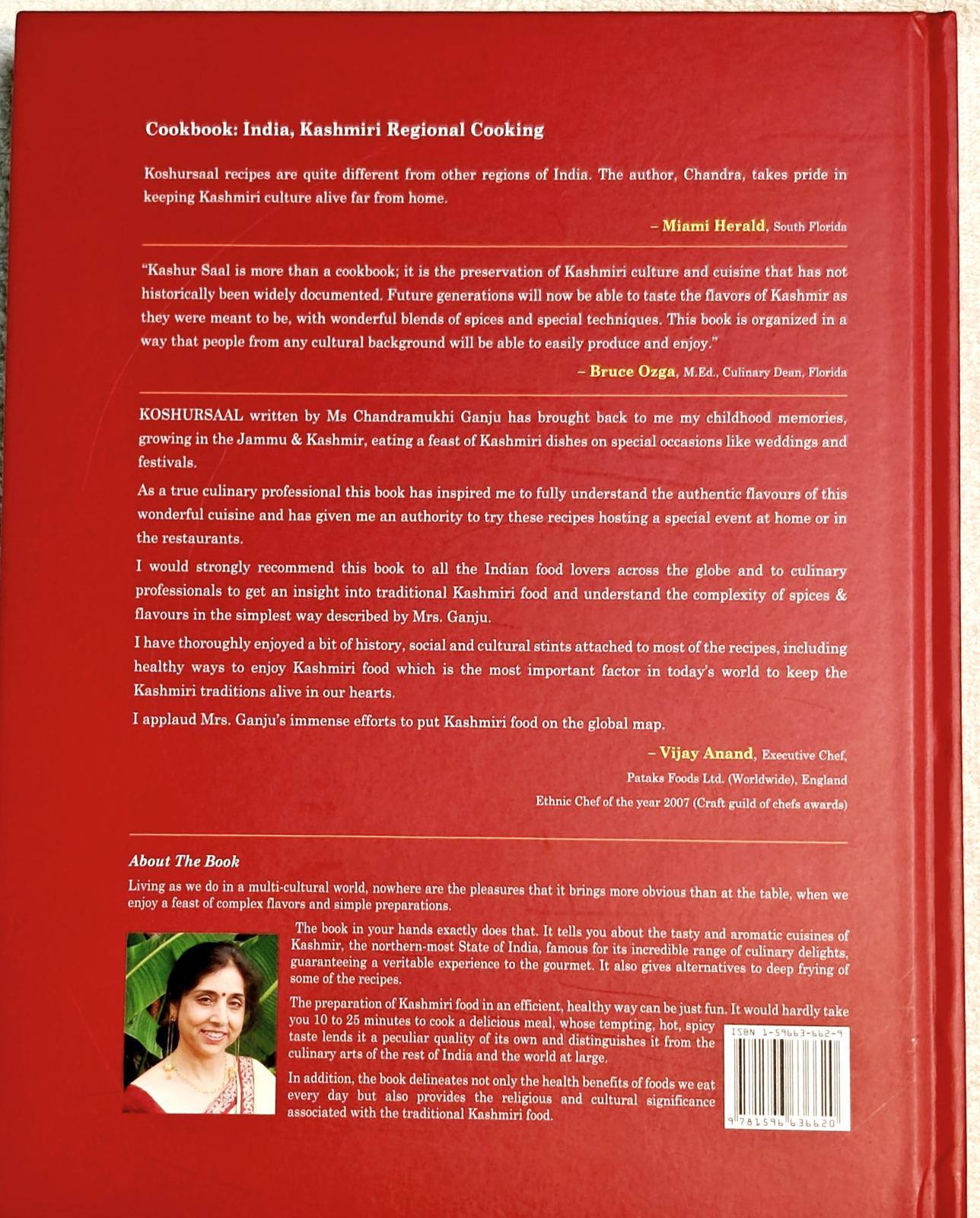
 Koshur Saal
 by Chandramukhi Ganju
|

|
|
|
| Publisher : Shehjar Publications Publication date : November, 2025 Language : English Print length : 400 pages Item Weight : 4.8Lbs The book is available in USA at https://www.paypal.com/ncp/payment/4EL4Q9PD8V6WJ India at Matamaal, Restaurant in Gurgaon. |
|
|
| Synopsis |
|
|
| Koshur Saal Returns in a Stunning 5th Edition: A Heritage Cookbook for the Global Kashmiri Diaspora The much anticipated 5th edition of Koshur Saal, the celebrated Pandit Kashmiri cookbook by Chandramukhi Ganju, is now available in a beautifully produced hardbound format. Printed on premium-quality photo paper and enriched with vivid, full-color photography, this edition is more than just a cookbook, it is a treasured archive of cultural and culinary heritage. Koshur Saal (translating to “Kashmiri Feast”) has long been a favorite among food lovers, home cooks, and cultural enthusiasts. Now, this new edition goes even further, reviving forgotten recipes that had quietly vanished from daily kitchens and lovingly preserving them for future generations. This book is more than a collection of recipes. It’s a heritage volume for the global Kashmiri diaspora a way to reconnect with tradition, memory, and identity through food, says author Chandramukhi Ganju. It also shares the cultural and religious significance behind many of the dishes. |
| |
|
|
| Review by

|
|
|
| Each recipe comes with descriptions of its cultural and religious context, making the latest edition a pivotal milestone.The hardbound book culminates more than two decades of meticulous research, seeking to unite Kashmir’s time-honored recipes in one definite volume. Accompanied with pictures, each recipe comes with descriptions of its cultural and religious context, making this edition a pivotal milestone that safeguards, and explains, the Kashmiri Pandit culinary and narrative heritage. Koshur Saal, or 'Kashmiri Feast' when translated to English, seeks to revive forgotten recipes that vanished from everyday cooking and to ensure their safeguarding. Chandramukhi Ganju, author of the cookbook, described her book as “more than a collection of recipes." She added that "this volume connects the global Kashmiri diaspora using food and cuisine as a way to reconnect with tradition, memory, and identity.” Designed as a coffee-table-worthy volume perfect for gifting, collecting, or archiving, the book features recipes ranging from the iconic Rogan Josh and Dum Aloo to lesser known treasures like Wugar Baata and seasonal delicacies. Koshur Saal preserves the integrity and spiritual essence of Kashmiri cuisine. |
|
|
| Review by

|
|
|
| In our multicultural world, few joys compare to sharing diverse foods at the table. This book celebrates that delight through the rich and aromatic cuisine of Kashmir, India’s northernmost region known for its unique culinary heritage. It features flavorful recipes, many with healthier alternatives to deep frying, proving that Kashmiri cooking can be quick, fun, and done in just 10 to 25 minutes. The dishes stand apart from the rest of India with their bold, spicy character and distinct style. Beyond recipes, the book highlights the health benefits of everyday foods and explains the cultural and religious significance behind Kashmiri traditions. Koshur Saal (“Kashmiri Feast”) has long been cherished by home cooks, food lovers, and cultural enthusiasts. This new edition goes a step further by reviving forgotten dishes and preserving them for future generations. Koshur Saal Book“This book is more than recipes—it’s a heritage volume for the global Kashmiri diaspora, a way to reconnect with tradition and identity through food,” says author Chandramukhi Ganju. Some of the dishes have a cultural as well as a religious background and hence are prepared on special occasions. I have tried to indicate at the appropriate places the necessary information in this regard. Quantities of spices specified in recipes are merely a guide. So, feel free to experiment and adjust these as per your liking. In general, chilies and salt are the two ingredients that can be varied according to personal taste.” “Deeply concerned at the fact that future generations of diasporal Kashmiris might lose touch with authentic Kashmiri cuisine, as they do with their native language, it occurred to me that I must pass on the recipes learned by me from my mother, Prabha Pandita, to the generations to come.” |

|
|
|
| Interaction with
|
|
|
| Shehjar: What is Koshur Saal? Author: Koshur Saal is a Kashmiri Pandit cookbook and a cultural archive. It is not just a collection of recipes; it preserves memories, traditions, stories, and the soul of Kashmiri kitchens. Koshur Saal literally means “Kashmiri Feast.” ________________________________________ Shehjar: What inspired you to create Koshur Saal? Author: After the exodus of Kashmiri Pandits, food became one of the strongest ways our culture could survive. If our cuisine is not preserved, future generations will slowly lose the taste, longing, and emotional connection to Kashmiri food. My own children, and the children of the Kashmiri community, inspired me to create Koshur Saal. This book is written for all my Kashmiri children. We lost our homeland, but we cannot allow the erasure of our cuisine, culture, and traditions. ________________________________________ Shehjar: What makes Koshur Saal different from other cookbooks? Author: Most cookbooks teach you how to cook. Koshur Saal explains why. It is a cultural record where every dish carries history, memory, and family wisdom, preserved exactly as it has always been. It reflects the distinct Kashmiri Pandit culinary tradition, which does not use onion or garlic, setting it apart from Kashmiri Muslim cuisine and cookbooks. ________________________________________ Shehjar: Is this book only for Kashmiris? Author: Not at all. It is written in simple, clear language and meant for all food lovers. These are recipes that have survived generations, and they belong to everyone—Kashmiri or not. ________________________________________ Shehjar: How long did it take to create Koshur Saal? Author: This is the fifth edition of the book. The first edition was published in 2009 in paperback format. Over the years, I have added new recipes and revived forgotten ones. This book is a labor of love and deep respect for elders who cooked by instinct, not measurements, but always with love. ________________________________________ Shehjar: Is Koshur Saal beginner-friendly? Author: Yes. The instructions are clear and thoughtful while honoring traditional methods. No fancy techniques or modern gimmicks—just real cooking, explained properly. All photographs are of everyday food I cooked and documented myself, often after coming home from work. ________________________________________ Shehjar: What emotions do you hope readers feel while reading Koshur Saal? Author: Connection. Nostalgia. Respect. And the quiet realization that food is one of the strongest links between generations. ________________________________________ Shehjar: What format is the book in? Author: A hardbound, full-color, coffee-table-style collector’s edition, meant to be cooked from, gifted, and cherished for generations. This is not a disposable book. Traditions deserve permanence. ________________________________________ Shehjar: What does Koshur Saal mean emotionally to the author? Author: It is a tribute to Māej Kashir, to parents, grandparents, and generations whose hands shaped these dishes. We may be scattered across the world, but even in the diaspora, we will not forget our traditions. This book keeps our culture and cuisine alive. ________________________________________ Shehjar: What do you hope Koshur Saal achieves in the long run? Author: That future generations never have to guess how their ancestors lived, cooked, and celebrated. |
|
|
| About the Author |
|
|
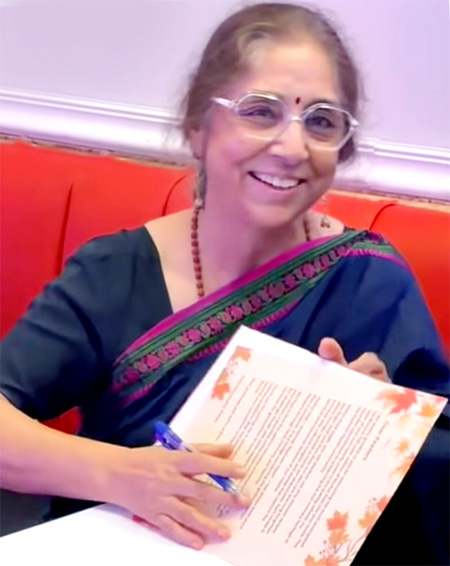 ChandraMukhi Ganju’s journey of cultural preservation began after the Kashmiri Hindu exodus of the early 1990s. Forced to leave her homeland in 1993 due to escalating terrorism, she rebuilt her life in the United States with one urgent concern—that Kashmiri language, cuisine, and traditions might fade with time and distance. Instead of accepting that loss, she transformed her worry into action.
Believing that food is memory, identity, and heritage on a plate, she began documenting and sharing traditional Kashmiri recipes. She created koshursaal.com, one of the first online platforms devoted to Kashmiri cuisine and culture. The enthusiastic global response encouraged her to expand her mission. In 2009, she published Koshur Saal, an authentic cookbook that goes beyond ingredients and methods. It preserves the cultural and spiritual meaning behind traditional dishes and introduces them to younger generations and non-Kashmiris alike. Now headed into its third edition, the book revives recipes that had quietly disappeared from daily kitchens, offering both nostalgia and preservation. ChandraMukhi also became the first Kashmiri food blogger on YouTube, sharing monthly recipe videos through Shehjar magazine. Her work has inspired the diaspora and sparked new interest among youth who may never have seen these dishes prepared at home. To her, cooking is an art and an experience. She believes that a peaceful, intentional kitchen infuses meals with positive energy that nourishes both the body and family ties. Her cultural commitment extends beyond food—she also writes plays in the Kashmiri language to keep the spoken tradition alive. Through storytelling, culinary revival, and creative outreach, ChandraMukhi Ganju has become a custodian of heritage—ensuring that Kashmiri culture is not just remembered, but shared, celebrated, and savored across generations. |
|
|