Hindus revere the Vedas as their supreme scriptures. Among the divisions of the Vedas—Karma-kāṇḍa (rituals and sacred duties), Upāsanā-kāṇḍa (devotion and worship), and Jñāna-kāṇ ḍ a (knowledge)—Karma-kāṇḍa holds the foremost place, prescribing the sacred disciplines through which dharma (righteousness) is lived.
Within Karma-kāṇḍa, the Vedic yajñas (sacrificial rites) are elaborately described. Among them, Pitṛ-yajña (offering to ancestors), also known as Śrāddha (act of reverence performed with faith), occupies a central position. In ancient times, people had unshakable faith in Śrāddha. Today, this devotion is fading; many dismiss it as mere formality. Yet, the scriptures are clear: only Śrāddha performed with deep faith and purity of intention bears auspicious fruits.
As the Manusmṛti declares:
 (Pitṝ n devānśca yajñena tarpayet saha dakṣ iṇ āḥ .)
"With yajñas, along with offerings, one should satisfy both the gods and the ancestors."
At least once a year, during the dark fortnight of Āśvina (September–October), known as Pitṛ-pakṣa (fortnight of ancestors), one performs Śrāddha to seek blessings for health, prosperity, progeny, and fulfillment of desires. As Maharṣ i Jābāli affirms, observance during this period ensures the well-being of both ancestors and performer. The Mahābhārata warns: “He who does not offer Śrāddha to his ancestors is called a fool by the wise.” Each lunar day (tithi) and constellation (nakṣatra) has its own significance and spiritual benefit.
In Kashmir, Pitṛ-yajña has always been observed with strict discipline. Unlike other regions where rituals softened over time, Kashmiri Pandits preserved the śāstric purity of the tradition. This strictness was not harshness—it was strength, the armor that protected dharma in turbulent times. The Nīlamata Purāṇ a prescribes that offerings to ancestors are as essential as offerings to gods, maintaining cosmic balance ṛṇa (debts of life). A Kashmiri Pandit never considered Śrāddha optional; it was a duty embedded in the soul.
Even the saint-poetess Lal Ded, who transcended ritual to experience mysticism, never abandoned the karma-kāṇḍa. Her vākh (verse) reminds us:
 Without cleansing the vessel, how can the nectar be held?
Without honouring the roots, how can the tree bear fruit?
.jpg)
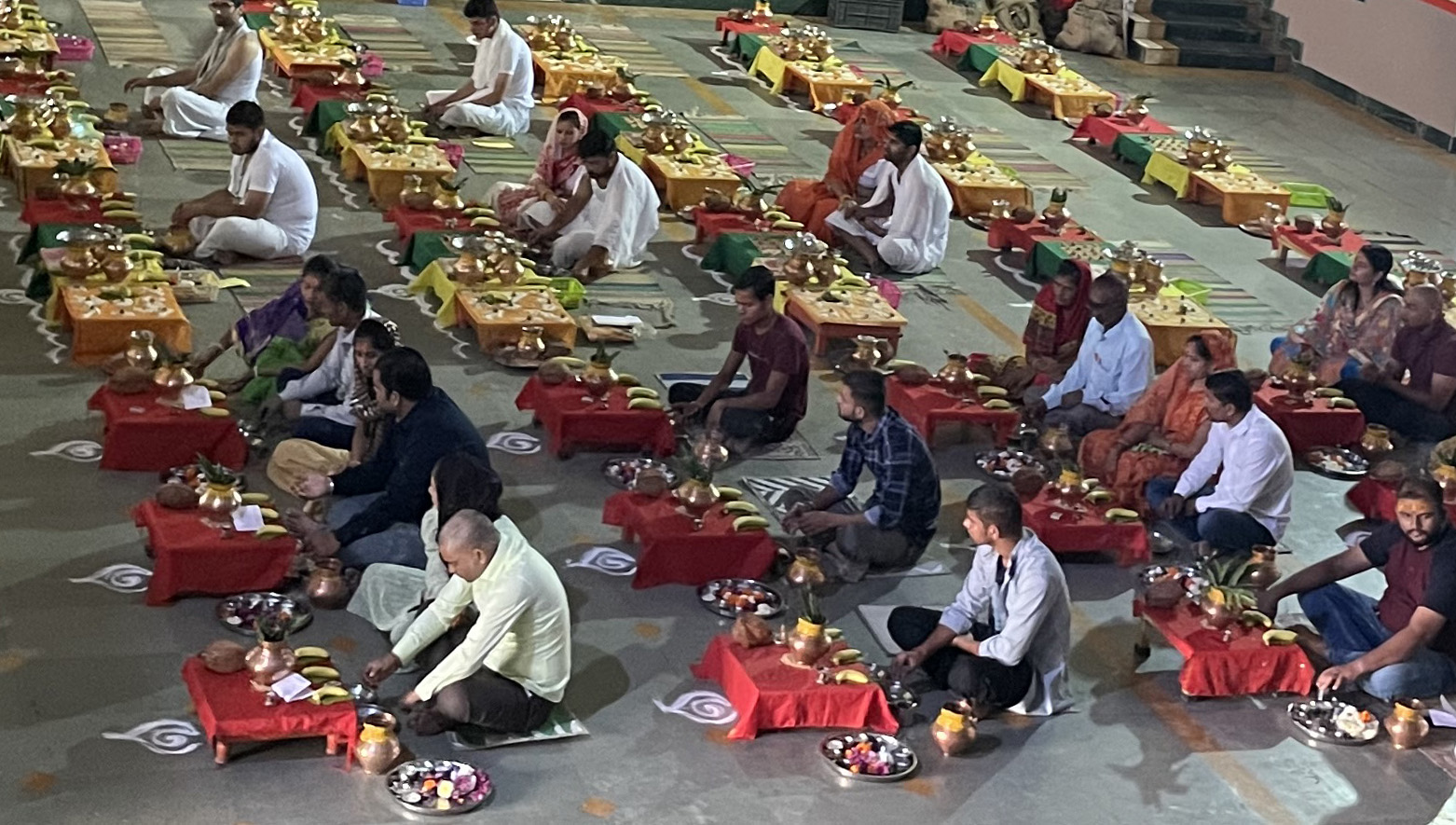
During Pitṛ-pakṣa, Kashmiri households traditionally observe Śrāddha and Tarpana (water offerings) strictly according to the lunar tithi. Pindadāna (rice ball offerings) on the banks of the Vitastā (Jhelum) is performed with utmost devotion, as the waters are believed to carry offerings to the realms of ancestors. Community feasts, where Brahmins are fed reverently, symbolise that the Pitṛs themselves are being served. Neglecting Śrāddha endangered not only family well-being but the continuity of the lineage.
The ritual is meticulously described in the almanac (janthri): offerings are placed before the decorated photo of the departed, the performer transfers the yagnopavit (sacred thread) to the left arm, holds black sesame seeds and water, recites the prescribed mantra (incantation), and sprinkles water on the offerings. Sacred rivers, lakes, and tirthas (pilgrimage sites) enhance the efficacy of these offerings, from Martand and Gangabal in Kashmir to Gaya, Haridwar, and Rameshwaram in India.
For Kashmiri Pandits living abroad, pitṛ-yajña serves as a vital link to their roots and dharma. Even thousands of miles away, flowing rivers and lakes—such as the Mississippi in the USA, Thames in the UK, Lake Ontario in Canada, or Lake Geneva in Switzerland—become sacred channels through which offerings can reach the departed. Here, faith transforms geography into a bridge connecting the living and the ancestors.
In diaspora families, Pitṛ-yajña provides not only a spiritual outlet but also a psychological anchor. Performing Śrāddha, Tarpana, and Pindadāna in a foreign land helps the family collectively remember and honour their lineage, reinforcing emotional bonds across generations. Children learn the importance of dharma, discipline, and gratitude, even when physically distant from the traditional sacred sites of Kashmir.
By observing Pitṛ-pakṣa, families maintain the ancient traditions of the Kashmiri Pandit community, ensuring that the knowledge of mantras, offerings, and ceremonial procedures is transmitted intact. These acts safeguard a living memory of homeland and heritage, creating a subtle but powerful sense of continuity amidst the challenges of diaspora life.
Offerings during Pitṛ-pakṣa are rich in symbolism. The pindas (rice balls) represent the physical sustenance of ancestors, while water poured during Tarpana acts as a medium for cleansing, connection, and spiritual flow. Lighting lamps symbolises the illumination of memory and the unbroken lineage of dharma. Each act becomes a silent conversation between the past and present, a reaffirmation that the ancestors’ guidance and blessings continue to shape the family.
Even in modern times, diaspora Kashmiri Pandits strive to replicate the sacred timing (tithi) of Pitṛ-pakṣa, consulting their almanacs and performing mantras with exactitude. Community gatherings in temples or by lakes help maintain social cohesion, allowing collective remembrance and reinforcing shared identity. The rituals, though performed far from the Himalayas, retain their spiritual potency, as devotion and intention are considered more important than location.
Pitṛ-yajña is not a bribe to the afterlife but a bridge to the past. Through Pindadāna (rice ball offering), Tarpana, and Dāna (charitable giving), the living reaffirm their bond with ancestors. This act nurtures humility, remembrance, and continuity, honouring a lineage that shapes the future. As Swami Vivekananda said: “We are the children of the past, heirs of the future.” By honouring our ancestors, we strengthen our roots and wings simultaneously.
Even historical figures like Shah Jahan recognized this sacred practice. In his final days, imprisoned by his son Aurangzeb for seven years, he wrote: "Ae pisar, tu ajab musalmani, ba pidray zinda aab tarsani,
Aafreen baad Hindwan sad baar, mai dehand pidray murda-rava dayam aab."
(O son, you are a strange kind of Muslim — who lets his living father thirst for water. A hundred times more admirable are the Hindus, who even offer water to their dead parents.)
This was not merely a father’s cry but a deeply human recognition of a civilization’s soul—the unwavering commitment of Hindus to honour their ancestors, to not let memory die. Similarly, Lord Rāma, Śrī Krishna, Mahatma Gandhi, and even Akbar and Birbal exemplified respect for lineage, showing that true dharma begins with honouring forefathers.
When the lamp is lit during Pitṛ-pakṣa, it is more than a flame—it is memory, gratitude, and a silent conversation between the soul and the stars. The diya glows, flowers rest gently, and in that stillness, the ancestors listen. To forget them is to forget oneself; to remember is to keep them alive—not just in rituals, but in values, identity, and dharma. That is the essence of Śrāddha, the eternal dialogue of Pitṛ-pakṣa.
Finally, Pitṛ-pakṣa reminds us that remembrance is not passive nostalgia but an active spiritual responsibility. By honouring ancestors, the living cultivate humility, continuity, and gratitude. Even in exile or diaspora, each offering, each recited mantra, and each observed ritual becomes a bridge to the past, grounding families in their dharma, values, and identity.
Thus, Pitṛ-pakṣa teaches us that memory itself is strength. He who remembers his ancestors remembers himself; he who forgets them, forgets his own soul |


 Veer Krishan Sharma, a native of Village Akura, District Anantnag, Kashmir, is a postgraduate in Hindi from the University of Kashmir. Began his professional journey as a teacher at Tyndale Biscoe School, Srinagar Kashmir. After the migration from Kashmir, relocated to New Delhi, where he transitioned into the publishing industry. Worked extensively on Cambridge books and journals, ensuring the highest standards of academic publication. Currently, he continues to contribute meaningfully as a freelance writer and editor, focusing primarily on academic books and journals. His work reflects a deep commitment to preserving and promoting the spiritual and cultural legacy of his homeland.